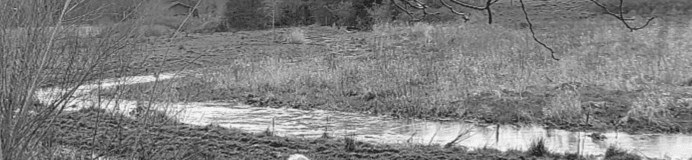
We were walking back through the water meadows. It was late February and we had wandered the muddy path to Glandford ford, taking in the day with the intention of writing – writing about what we found. That is the fundamental prompt that lies behind all the more specific ones on these days.
Today, I wasn’t noticing. I wasn’t writing. I was thinking about the writing I had left at home, which was feeling more important. It has been dawning on me that I have strayed from the path – not the muddy one above the river – my own – the one that had brought me to Cley in the first place – the one where it was the writing that mattered and the outside was coincidental, influential perhaps but not the point or purpose.
Somewhere along the line I had fallen into the trap of thinking that we are all like-minded people when we’re not. I had fallen into the trap of thinking that just because I had unexpectedly discovered that I am a poet, that meant I had to be an eco-poet, and/or just because I loved being outside writing that meant I had to be writing about the specific outside I was in.
That is not, and never was, my space.
Later Sue would say, “I was looking at the Glaven and writing about Paris.” [ii] Of course she was, she had just returned from Paris (again). It is her spiritual home, and the Seine was also in flood. More importantly, she knows the thing I had lost sight of, namely that prompts are prompts and we can completely ignore them. We can write whatever we want to write, rather than what we’re expected or being encouraged to write. We don’t need permission.
When I realised I had lost my own plot, I had been feeling that I needed permission to back-track
and pick it up again.
Expectations are subtle and contagious. Influences are subtle and disruptive. Subliminal messages are difficult to defend against, especially if we don’t yet have full confidence in what we’re trying to do, even more so if we don’t yet completely know what we’re trying to do and/or why.
Walking back through the water meadow, Jacqueline and I talked about shifting values and what matters and the important question of ‘why we write’. I have many answers to that question. The overriding one is that I write because I can’t not, but there are other reasons that shift from day to day, mood to mood, project to project.
I believe we write to find out why we write. Only in putting it on the page do we feel our way into why it matters enough to want to do so.
What is mattering to me right now is story. Not the myths and legends that I am deeply attached to, not the fictions that I read for entertainment and elucidation, but the ancestral story which in a faded, braided, uncertain sense is my own story. When I write about my parents or the wider family or my childhood, or teenage, or later, memories, or the curating of my home, I know that I am reaching for something. I don’t yet know what that is or whether I will grasp it firmly enough to pull it down onto the page.
Inside of that is the deep feeling that it matters that we all do this, that we reach into ourselves and our families to unearth all the things that seemed so important then precisely because they vanished right into the air.[iii]
I have a growing sense that the simple stories of unknown people are more important than the dates of kings and queens and battles and falls of empires and governments and revolutions and scientific discoveries and religious dogma rising and falling and mutating.
I have a growing sense that what really matters is the forgotten stories of the ordinary people who lived through and alongside and underneath all of that…the ones who died because of it and also the ones who survived it and tried to live a different life or a same life afterwards. The ones who succeeded and the ones who failed and the ones who made a half-decent job of it.
I have a sense that this matters because I am – and probably you are too – a product of that.
We don’t all have children to pass things down to, or we have children or nieces and nephews who have no interest in them. Every time a house is cleared, so much is lost.
Things that we are losing will be lost forever, unless we catch them in the butterfly nets of memoir and family history. Childhood games. The jargon of long-gone jobs. What it was like on winter mornings with ice on the inside of the windows and the smell of paraffin from a small heater in the kitchen, where I was being forced to eat porridge I did not want. Those summer afternoons when all the work was done, or being left undone because it was Summer. Neighbours who chatted over fences that were in any event no more than waist-high chicken wire, trelliswork for sweet peas, and easy to climb over. The yellowed patch of dead lawn when we finally emptied the paddling pool when September came around.
These things matter as much (almost) as the wars and the ones who went to fight them and came back changed or not at all, and the ones who were sent home unenlisted because a recruiting sergeant took it upon himself to say: your family has done enough.
Single lines of memory matter so much.
So when I am handed a box full of disparate, disconnected, random memories from my family
and the wider sort-of-but-not-quite “my” family, there is a responsibility. I need to make of it what I can.
I make a start. I fall into a ‘needing’ to make something coherent of fragments. Or several somethings, more likely.
To begin with all I can do is decipher and write. Think about form. And change my mind. Put it all together, separate it out. Unravel. Reweave.
There is a point where I wonder if writing the One Ship stories was a dry run for this project. Then I slap my wrist, because both brothers’ experiences matter. It is not the job of those who come after to say this mattered more than that…because it did and it did not.
It is not for me to place this year’s plum blossom into some kind of hierarchy. I suspect the tree cannot remember the war in question – and as for the oaks who can, no doubt they have a different
perspective on it. No doubt they also lost many of their own to other wars in other times.
This is the writing I left at home when I went to Cley this week. Only, I didn’t leave it at home. I stood at a turn in the river by deer-trampled mud, I stood by the artificial weir with the music of falling water, I stood by the ford, and wondered about two young men walking through the detritus of
a war. What would they have made of day like today. A single-prop plane flew over and I wondered how they would have reacted to that sound.
On the walk back I started to talk about what I’m doing and why, and why that meant I hadn’t written much that day. Then I came home and wrote an eight-poem sequence that pulls together some of my answers to that question of ‘why? A sequence that talks about war and family and tree blossom and toads and reed mace and silence where there should have been speaking. About now and about then, the two being eighty years apart and still entwined.
Only when I had done that did I realise that the important question for me at this point isn’t ‘why?’ but ‘how?’ How do I keep showing up to a group that I deeply treasure, and at the same time do the writing that matters to me more than identifying birds and flowers? How do I find my own equivalent of looking at the Glaven and writing about Paris?
[i] A recurring series of workshops run by Jonathan Ward on conjunction with Norfolk Wildlife Trust
[ii] Sue Burge – check her out at https://sueburge.co.uk
[iii] Bruce Springsteen (The River)
