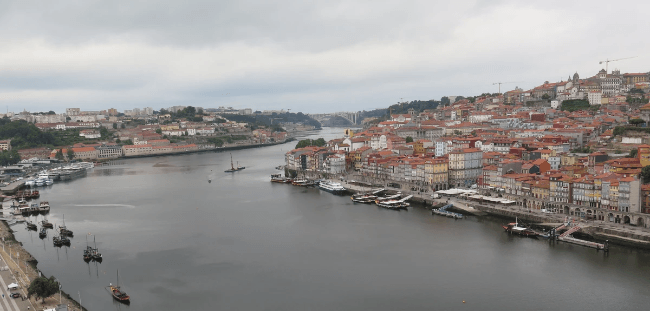
They say the devil is in the detail…but the truth is that so are the angels, the golden threads, the things we didn’t know we wanted to know. As I said last week the best parts of my cruising the river were the actual cruising of the river, and I probably would have been perfectly happy if we’d just quietly drifted up and back and never really set foot ashore. But I’d almost certainly have been the only person on that boat who felt that way, and to be fair I would not have learned anywhere near as much as I did, had I not been encouraged – there’s never any kind of obligation – in
truth I could have stayed on board for the duration – but I was encouraged to join the off-boat excursions. All of them, because (a) I had paid for them and (b) who knows when / if I will pass that
way again.
I did not keep a diary on the trip. Other than my normal Morning Pages, and a few scribbles in a notebook, I wrote nothing at all. So this is the random remembering and the scavenging from briefing notes and the whatever I’ve bothered to look up in the meantime. I make no apology for the scrappy nature of how it falls out…because that’s how it came in.
I thought maybe I'd have so little it'd emerge in a single post. Apparently not. Do feel free to skip ahead or take a break.
Vila Nova de Gaia // Porto
We weren’t berthed in Porto at all, but across the river in Vila Nova de Gaia. On the south bank of the river, the city arose from the merging of Gaia and Vila Nova, both of which were heavily involved in port (as in port wine) production. This was the side of the river where most of the cellars were located and still are. Land is still cheaper here than in the historic Porto. The land and beaches south of the river attracted the bourgeoisie associated with the wine trade, and then with improved links to the more famous city it became a typical commuter suburb.
Perhaps back in the day when all the barrels, full and empty, were essentially man- and mule- and wind-handled up and down the river, this side was also easier to land and off-load. I’m making that up, but in the pre-tourism days when practicalities were the thing, it would have made sense.
It was one of many places – literally everywhere we moored for the night – that we didn’t get to see more than a passing glimpse of. If I have one tinge of regret of the tour, this is it: not having time to simply walk dockside everywhere we moored. Nova de Gaia looked like it would be worth a wander.
Once we started moving up-river, they were mostly, I suspect, no-where places whose only paying function is to tie up the passing river traffic – not even host it. A tourist-tat stall or two, a man under an overpass selling walnuts, closed-up bars, men sitting outside in the early morning. Women carrying shopping. That was as much as we saw of many of these places. Only a couple of streets away from the bank in our air-conned coach and we’d be looking at barely-driveable lanes, decaying properties, closed bars and restaurants. The European money has given the Portuguese its “National” roads – two lane, high(ish) speed, highways north-to-south, and taken away the stop-over economy from now by-passed small towns and villages. I would like to see the cruise companies do a little more to fill some of that gap.
I have no idea how that would work. There are so many boats on the river, that lock times and berths are subject to fierce negotiation – the idea of a boat wanting to moor for longer in one out of the way place probably isn’t viable.
So if I do it this same trip again, and to be fair I probably won’t, I’d skip the official itinerary and take myself off into the local haunts of wherever we hitch up. I’d take time to look at ‘real’ life along the river: the shops, the private gardens, the street art / graffiti, ordinary people doing ordinary things.
I feel I have devolved from traveller to tourist. It’s not so much an “age” thing as a “confidence” thing. Finding my way back, I hope to re-evolve, but that may take more time than I have. We’ll see.
Meanwhile, I loved the idea of a Gaia New Town, but my literal translation was way off beam. Gaia has nothing to do with the earth goddess, it seems, but shares a root with Gaul and Galway – from Gall, the name by which the Celts called themselves. This was a Celtic port.
Except that, maybe, they took that name from the ancient Greek (Γαῖα), the poetic form of Γῆ (Gê), literally meaning "land," "country," or "earth". The people of the earth. Many early peoples simply called them selves ‘people’ - the Inuit, for example – or name themselves by the land they inhabit as the Australian first nations people do, tying themselves specifically to their birth place. And so…Gaul, Galway and Gaia (be she a town or a goddess) have the same root. That pleases me.
This was not just a Celtic port, it was the Celtic port – the most important one in the region, eventually giving its name to the entire country. Portus Cale - the port of the Celts – spanned the river, encompassing Porto and Nova de Gaia. It was a short linguistic journey from Portus Cale, through Portucale, Portugale, to Portugal.
The notion of the “river of gold” is also a mis-translation, which explains why I keep wanting to mis-spell it as ‘Duoro’ - I want it’s name to mean ‘of gold’. That’s my incorrect back formation – apologies if I haven’t caught all of the corrections. The correct spelling is Douro and Douro falls out of the Latin Durius, which itself is birthed by the Celtic dwr…which simply means ‘water’.
It’s a local equivalent of a River Avon or a River Ouse: the tautological geographical water courses that abound in the UK. We were so imaginative, back in the day!
We caught a glimpse of the mouth of the river as we were driven up to the Ponto De Luis I – which we’d cross on foot, for our all too brief tour of the heart of Porto – and an equally short-lived closer look on the final evening. I got my best view from the plane as we headed home: stretches of golden sanded beaches. And a note to self that it was the Atlantic I was looking at. Perhaps not the warmest of swim spots. I want to find out though-but.
Meanwhile, the bridge gave good views of the barques, now only used for the annual regatta, and the quayside, with its string of (presumably, once) merchant houses, built side by side but not in coherent terraces, simply not wasting an inch of land-space, the arches of the wine cellars, the chaotic clamber of the city up the hillside, hinting at the maze of streets and alleyways. There were the modern touches of construction-firm banners, unexpected tagging, Portaloo’s in their icon blue, national flags hung from windows in honour of the ongoing football world cup. A land-poor historic city in modern times.
I was much taken by a large-scale portrait on what is now a gable wall, where a previous building has been demolished. And this is why I love the internet! It took me only seconds to find out the who and the what. The sitter (if there was one) is anonymous. The artist is Frederico Draw . For someone who hip-hop culture, he’s not doing so badly. The link will take you to more of his work and some of his thoughts. Do look him up.
The work that I loved so much has been in place since 2015 and is showing the weathering of time. That’s part of it though…the accessibility of the work, but also the temporality of it. Even if the building remains standing forever, which it won’t, the surface on which the work is painted will deteriorate and ultimately collapse. Call me slow, but I have only just realised that these guys are the fresco painters of our age – with a wider range of subjects and patrons available to them - but still knowing that the work has a limited lifespan.
Living in a city that has its own share of wall-work, I’m absolutely in favour.
This particular work, I found is called An.fi.tri.ão Anfitrião – simply the Portuguese for host, hence the open hand of the old man welcoming the people crossing the bridge into the city. No apparent reason for breaking the word down in the title of the piece…unless, maybe, to help non-locals pronounce it.
Elsewhere a wallful of script intrigued me. With the help of the dreaded AI, I have figured that it translates to something like:
"She told me that I have a different kind of beauty. She didn't allow herself to feel — I wonder what it would be like to just think about things but never feel them. Her observations about the world, though, were poetic, and I felt happy making her laugh. We met on a bridge that reflected the current state of my life: between places. I will always remember meeting her in space. Over the Douro. We were like children living life slowly, as if we were doing it for the first time. And I can't
forget the way she allowed me to live an entire life in just three days...
And I know I kissed her hands, yet I am left wondering if she ever felt my face. Most people look at my face, look into my eyes, and only hold them in thought. But who… who truly feels my face with their fingertips? And if so, what would she think? Or better yet, how would she feel? How would she feel…I only hope she keeps somewhere within her some part of me."
There are gaps where it has been scrawled over, and this was the best translation I could get Google to do for me. Any Portuguese speakers familiar with the text, do update me!
It appears it is not known who wrote it, or for whom. I hope she knows who she is. Me, I love that line like children living life slowly, as if we were doing it for the first time. I’m intrigued by the idea that our lives speed up as we get older, because we realise we’ve been here before…maybe we’re trying to fast-forward what we think are the boring bits, without realising they are the ones that really matter.
Porto streets are narrow, and so are the buildings. It’s a feature of towns in steep river valleys. Land is at a premium, and if you can’t build outwards, you build up…four, five storeys or more. Plus this is riverside. Floods are not unheard of. The ground floor of any of these buildings is under constant threat.
At the same time, this is premium land, a place to be, to be seen to be. That is nothing new and it shows in the local architecture. Two indicators of the conspicuous consumption or, if you prefer, displays of wealth, on the outsides of the houses are the decorative tiling and the ornate
balustrades and balconies. The metalwork was initially expensive, and the more ornate, the more it cost. It is, as Bruno put it, like having a Porsche in the drive even if you’ve no food on the table. The neighbours think you’re rich.
The tiling is a more complex thing though. It is not a cheap thing to do in the first instance, but it has paybacks. Firstly, there is (or was – doesn’t look to be particularly well-enforced these days) a local by-law that says/said that if your building-front is painted, you have to repaint it at least every three years, a substantial ongoing cost, given the need for scaffolding etc. Tiles are a one-off investment. Also, it rains around here. Rain runs straight down the tiles, whereas it has a tendency to seep into render, the latter making the walls damp and (over time) stained and ugly – hence the repaint rule. Finally, there is the insulation quality of tiling. Their extra layer adds an element of warmth during the winter, if only by keeping out the damp – and, by reflecting the light, an element of cooling in summer.
Oh, and they are stunningly beautiful.
Of course we ‘did’ the Cathedral. It’s obligatory on any cultural tour. What I learned was how all those gilded altars are / were created. Wood, carved, then slip-plastered, maybe a few times, then gold leaf… and the reason they were never carried away in any of the wars or raids is not just because they’re big and bulky and heavy, but mainly because you can’t strip off the gold leaf for
re-use. In other words, they look impressive, but it’s single-use technology.
I did what I do in any temple, church, sacred grove…I took a quiet moment and prayed for peace. A gentle thought, a vain hope.
And we moved on.
I admit to being curious when the tour outline included the words “railway station”. My Dad worked on the railways, I grew up not many miles from the original Stockton-to-Darlington, very-first passenger line, I love a good Victorian station, but even so, I wouldn’t think of including one on a tourist itinerary. São Bento (St Benedict – named for the Benedictine convent that once stood on the site) is something else though. Externally it looks no different (except in detail, maybe in scale) to many similar buildings that you’d find in, say, Norwich, or Manchester, or London. It’s when you get inside the entrance hall…
There you are presented with over 550 square metres of azulejo tiles – painted, tin-glazed ceramics, used to make large-scale mosaic artworks. The traditional blue & white scenes cover Portuguese history: major events and ordinary life. We were told that one of the particular things about these artworks, differentiating them from many others through-out Portugal, although perhaps less so as time moves on, is that they still have the original paperwork used for the drafting of the painting…and it has been digitised…so if any individual tile is damaged it can be replaced.
That is both awesome, and also not. It means that these panels need never become degraded – and there’s part of me feels that somehow that makes them less valuable. The irreplaceability of a thing, is part of its ephemeral beauty. If you can just download a replica...and especially if you can't tell the replacement from the original...
But in the now, I’ll agree they’re impressive and beautiful…all the more so for the ordinariness of the departure boards and the platforms beyond.
Outside the station, I wandered through a pocket park and photographed strange artworks that I’ll need more time to work out.
I walked past the queues for the bookshop. THE bookshop, the Livraria Lello, the one that trades on the premise that J. K. Rowling started writing the Harry Potter novels there, though she denies any connection – yes she was in Porto at the time, she says, yes she was writing in a coffee shop, just not the one in this book shop. The queues outside the shop suggest that either the myth, or the beauty of the shop’s interior make it worth the wait nevertheless.
Look it up – it probably does – which makes me doubt the version that says Rowling never went there.
The shop charges an entrance fee – erm…I don’t think so...is my instinctive response, but then it will redeem that against the price of any book you buy, and I’m trying to figure out whether or not I
approve of that as a business model. If Waterstones charged me to walk through the door, unless I bought a book while I was in there…how would I feel about that? Might depend on how beautiful the shop in question was, I suppose…might depend if there was a book I already wanted to buy.
I’m not really a shopper and something I said to a friend today is that I am trying to train myself to view shops and sale rooms as art galleries, places where I can admire the display without any hope or want to own the artefacts / merchandise. If many more people take up this point of view it might even make sense for shops of non-necessities to see themselves the same way, and think about charging an entry fee (redeemable upon purchase). How would it be if, say, Waterstones, charged us an entrance fee to be credited against any book we bought, or if the salvage salerooms did the same? Would they sell more, or would fewer of us visit?
In terms of the shop in question, back in Porto, I have looked at the internet. It is amazing inside. I can understand that most people simply want to look at the walls and the ceiling
and the staircases, which isn’t great if you’re trying to sell books…so why not sell tickets instead?
Would I have bought one, would I have queued up outside for however long, if I’d time to spare? Not sure. Before it had been monetised, I would have been delighted to have wandered in off the street and found it…this is the downside of the internet and TripAdvisor et al and the democratisation of travel writing: there are fewer and fewer serendipitous discoveries to be made. I think that’s sad.
I’m glad I never became a travel writer. Glad I’m not adding to the plague of ‘go see this’ (unless of course in my very small way, I am). I hope you’re all still wandering aimlessly. Hoping I still get to do so. Hoping there still undiscovered corners, with anonymous poems, beautiful décor, thought-provoking randomness. Hoping I still stumble into beauty and wisdom that no-one told me about beforehand.
~ / ~
