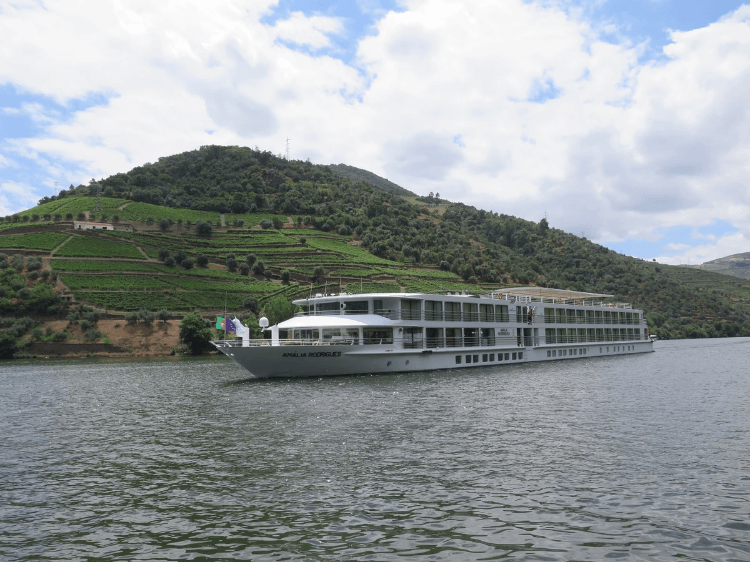
There was a time when I’d come back from a trip with a sheaf of notes and all I had to do was type them up, making sense of them as I went along. Times have changed. It has been a long time since I went abroad. I took time out to do the Masters degree (not being able to afford that and the travel), then my life underwent its seismic upheaval, then the pandemic hit, then I had to negotiate my responses to all of that, and the implications of my choices.
So, yes. It’s been a while.
Twelve years to be precise.
My last ‘big trip’ was trekking from Jomsom to Lo Mantang in 2014. Nepal underwent its own seismic shock the following year. Mine was a little later in coming. Its impact was not devastating but it was life- and mind-changing. Twelve years is a long time. I am not the person I was. I’m not just older. I’m altered. Changed.
Despite my original reluctance and rejection of the word, I retired. Literally. I withdrew from my old life and the world in which I lived it. Quit the career that had defined it. Stopped reading the newspapers that contextualised it. Moved house. Moved milieux.
Took stock. Set down roots. Sent out feelers.
What I didn’t know beforehand was that withdrawal is a pre-requisite for re-entry: for the entry into a new life, a new way of being in the world. Today a friend asked me what it was from his past that he needs to be letting go of. Without thinking I said: Everything. Non-attachment, you know?
Easy to say. Harder to do.
I know.
But I also think it is true. If we want to become who we are meant to be, who we want to be, then often we have to let go of everything that was not of our choosing that made us who we had become. We can re-invent, or we can re-discover, or we can simply shed the few layers that cover, our true selves.
Either-which-way, we need to let go of everything. The things that matter will come round again.
We can choose to take ourselves and the world seriously, but at the same time, we can choose to wear ourselves and the world more lightly. I don’t think the two are mutually exclusive. We can take ourselves seriously, believe fundamentally in the importance of our soul work and world work, and at the same time accept that the fates may have a different plan, and at the same time look for the silliness, the child-like way of being.
I am coming around to the view that non-attachment may be an incomplete definition of what we are best-served by achieving. Do the work, let go of the outcome…yeah…but also no but…without caring about the outcome, why do the work?
I have no answer to that.
And so here I am…with different priorities and different limitations.
Getting back into ‘travel mode’ was always part of my agenda, but I didn’t really know how I was going to do it. Or when.
I spent a couple of years meandering the UK, taking very short breaks, a night or two, a week or so. Until, it seemed I was ready to go further.
Further, in the first instance, turned out to be a week’s cruise up the Douro (and back down). I was repeatedly asked why I chose that particular trip, that particular tour company and I have no detailed answer. In simple terms, a ‘river cruise’ has been on my subconscious agenda for a long time – but why this river and why this operator? I can’t remember.
And it doesn’t matter.
What matters is that I am back!
A friend – and then another – asked if this trip had reignited my passion for travel, the thing that used to define me. Yes. It has. And again, I can’t really tell you why – except maybe it has shown me that I can go to the places I want to go, differently to the way I used to do it.
Maybe they will be larger groups, maybe there will be less walking, and maybe I won’t scribble so much on site so that I have to spend more time recapturing it when I get home. That’s all good.
Maybe I will choose to do it in a way that instinctively feels “stupid expensive” – and then maybe I’ll remember that my trips to Nepal and Cuba and Bhutan and New England and Finland and all the other places, in the early part of this century weren’t exactly cheap. So maybe I’ll remember how it was when I had to ‘save up’ (remember that concept?) or rely on the credit card to be able to keep doing this. Maybe I’ll remember to be grateful that, for now at least, I need to do neither.
I can be grateful that, with a bit of tweaking of the day-to-day, I can do whatever I want to do. I can travel again – widely, wildly, on my own terms.
I remember Clive telling me that you just decide what you want and then get on and do it.
My prompt box offered me a quote from the Vedic texts: You are what your deepest desire is. As your desire is, so is your intention,. As your intention is, so is your will. As your will is, so is your deed. As your deed is, so is your destiny.
When I think on these things, my first thoughts are that my deepest desires are the same as everyone else’s: to belong, to be loved, to be myself. When I think longer I realise that the order is, for all of us, the other way around. To be who we are comes first, and then to be loved, to belong. If we do not listen to our soul’s calling, we will always be at the beck and call of those around us.
My soul’s calling is to wander. To watch. To listen. To learn. To be quietly curious. So my years of away-days and weekends were the temporary solution, until I regathered my courage to step beyond the shores, until I remembered all the mis-landings I have already survived. They were – they weren’t the stop-gap, that is to do a disservice to all that I loved and discovered and learned in my own country – it ignores that I will continue to do such things – they were, however, the rebuilding of confidence to step out into the bigger, wider, world, on my own, and on my own terms.
So this is where it begins again, with one slow river cruise.
And I am back. Back to working out the finances of everyday so that the stupid-expensive is do-able when that is what calls to me.
Back in the sense of wanting to travel, to witness, to learn. Not back in the sense of thinking I could ever be a travel writer, which was an ambition back in the day. I know now that it’s more fun just going along for the ride and figuring out what it was all about afterwards.
I loved the ride. This is the afterwards. Me trying to catch the moments and whatever scraps of learning I picked up along the way. It’d never make one of them glossy mags I used to set my sights on, but I know its worth the wordage – if only for me.
Starting point: The Ship: MS Amália Rodrigues
Amália – pronounced with a long second ‘a’ – and Rodrigues ending with that Portuguese ‘eesh’ (soft ending).
She was the 1950s singer still recognised as the Rainha de Fado – Queen of Fado. So straightaway I’m reminded that I know absolutely nothing about Portugal – its culture, its history, its celebrities. From what I can tell Fado is to Portugal what The Blues is to the deep South of the USA. It is rooted in pain, loss, yearning. Unlike The Blues, though it seems not to have the uplift of spirituality or faith. It is deeply melancholic. From the Latin root, fatum, meaning fate, Fado is deeply nostalgic. Singer Leonor Santos describes the style as jealousy, pain, love and betrayal, it’s passion. Perhaps it is the vocal equivalent of the tango.
I have yet to hear it sung the way it should be: live, in a dingy back-street bar. We didn’t get to spend any time in a place where it might have been sung to its roots. Despite its operatic feel, it is a music of the backstreets. Simple guitars. Passionate voices. Simple pain. If/when I get back to Portugal, I want to find this music in the place where it belongs.
For now though, I’m on a boat named for her, the queen.
My cabin is large enough. Two single beds, aligned to allow a reclining view of the river banks passing by beyond the wall-to-wall, floor-to-ceiling, slide-opening window.
There’s a tv screen that I could have done without…did do without…didn’t figure out whether I could actually fold it back into the ceiling, but switched it off with its welcome message still showing and had no reason to turn it back on.
The beds were made up every day. The drinking water bottle refilled. The shower was more powerful than mine at home. The aircon was welcome.
River cruisers are not permitted to navigate the Douro at night, so the dark hours were quiet. I fell into a routine of early nights and early mornings.
Food was…well, I guess it depends on your baseline. I heard guests saying that it wasn’t up to the normal standard. I heard guests saying that it was amazing. For me…it was well beyond what I eat in my normality. For a start I don’t eat breakfast…but without coffee in my room, after journalling
I’d go in search of my caffeine fix and then succumb to fruit, and cold meat, and cheese, and fresh bread, and pain-au-chocolat (or whatever they call it in Portuguese). Lunches were an ever-changing buffet of hot and cold options – I stayed on the salad side of things, but it was debauched with pasta or rice, meat and fish, and always cheese or sweet deserts. In the evening, four courses was the norm…a soup, a cold something, a main, cheese or dessert (or both if you could wangle
your way around it). Wine on tap, from lunchtime until whatever time the bar closed…I restrained myself. No late nights. I opted out of tea and cake in that interlude between lunch and dinner, but confess to the occasional afternoon on deck asking the waitress who was sorry to interrupt me if I could possibly have a vinho rosé. I couldn’t bring myself to sit in a coffee shop on our mornings ashore and so I missed out on the fabled pastéis de nata… egg yolks, sugar, flaky pastry… maybe some other time.
While I did see the occasional plate where the meat was the end of the joint and inedible, or the duck was maybe past its best before it was caught & cooked, everything that was put in front of me was superb.
And I loved that they took our dinner order at breakfast, so that they knew how many of each they needed to put together that evening. A simple way of reducing food wastage - something the Spanish need to learn a thing or two about - but I'll get to that when we get to Salamanca.
For now that’s the context..
and surely enough for now
I'll be back as we settle in and head up river.
